
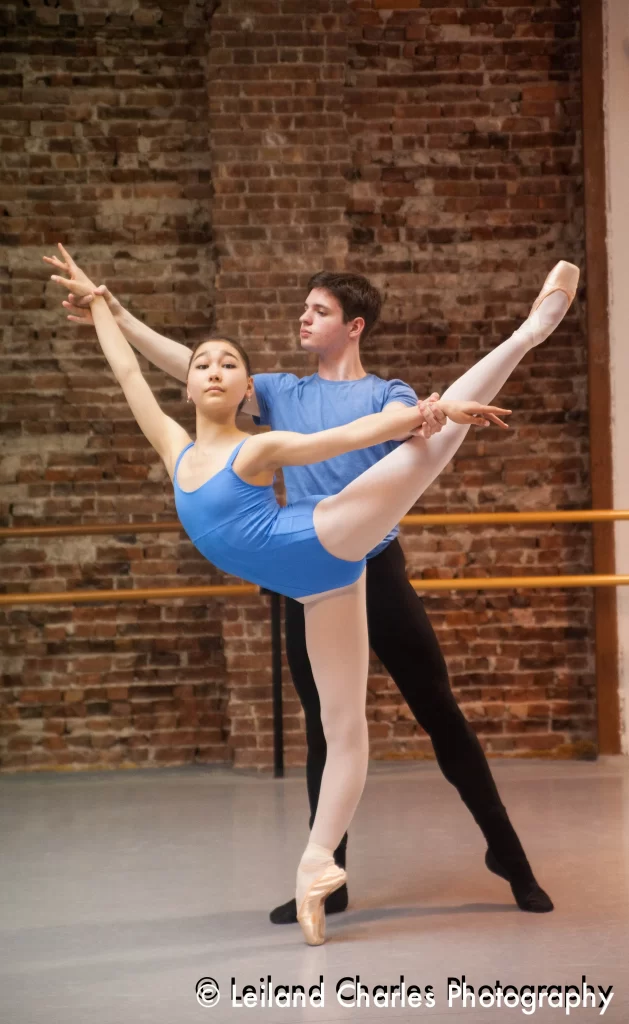
Every dance educator wants stronger, more flexible dancers. But in the pursuit of impressive extensions and picture-perfect splits, one critical piece is consistently overlooked: functional strength.
Flexibility without control is a liability. A dancer who can achieve a high line but lacks the core stability to hold it, protect their joints, or land safely is at real risk — and that’s true whether they’re training recreationally, competing, or on a pre-professional track. Ballet, contemporary, jazz, and commercial styles all ask something significant of the body. The question is whether we’re building dancers who can actually meet that demand.
Fusing Two Disciplines for One Competitive Edge
This training method draws from deep roots in both rhythmic gymnastics and classical ballet. By blending the geometric precision of gymnastics conditioning with the alignment principles of ballet, we target the body in ways traditional stretching simply can’t. The result is dancers who don’t just reach their limits, but own them — at every level.
The Structural Blueprint
Start Young. These conditioning exercises can be introduced as early as age six, building sound physical habits from the ground up. The earlier dancers learn how their bodies work, the more naturally strength and flexibility develop together — whether that student goes on to train professionally or simply dances for the love of it.
Build Habits First. In the first class of the year, invest about 30 minutes moving through each exercise individually. Focus on form, transitions, and teaching dancers to understand their own major muscle groups. Dancers who understand their bodies train smarter all season, and it saves significant time down the road.
Stretch at the End. Deep flexibility work belongs at the close of class, when muscles are fully warm and the body is ready to adapt. Warm muscles respond; cold ones resist, or worse, get hurt.
This approach works because it meets dancers where they are. A recreational student and a pre-professional student have different goals, but both need a body strong enough to support what their training asks of it. That’s exactly what this method builds.
We aren’t just stretching bodies. We’re building them to withstand the real demands of dance training, whatever those look like in your studio.
Join Me This Summer
I’m excited to share this work live at Dance Teacher Web Conference this August in my session, STRETCH & CONDITIONING: The Competitive Edge, Fusing Rhythmic Gymnastics and Ballet. Registration is open now. Come ready to move. If you’re attending the conference, come find me on Instagram and let me know what conditioning challenges you’re facing this season. I’d love to hear what your students are working through.